Here's a sales technique that actually works: show prospects exactly what's wrong with their website before they even ask. PageSpeed Analyzer automates this entirely — enter a URL, get a professional PDF report with AI-powered recommendations, and track when prospects open it.
It's a lead generation machine disguised as a performance tool.
The Real Problem
Google PageSpeed Insights is powerful but useless for most people. Business owners see walls of technical jargon — "Largest Contentful Paint," "Cumulative Layout Shift," "Time to First Byte" — and their eyes glaze over. They know their site is slow. They don't know what to do about it.
This gap is where agencies and freelancers make money. The ones who can translate performance data into plain English win clients. PageSpeed Analyzer does that translation automatically, at scale.
How It Works
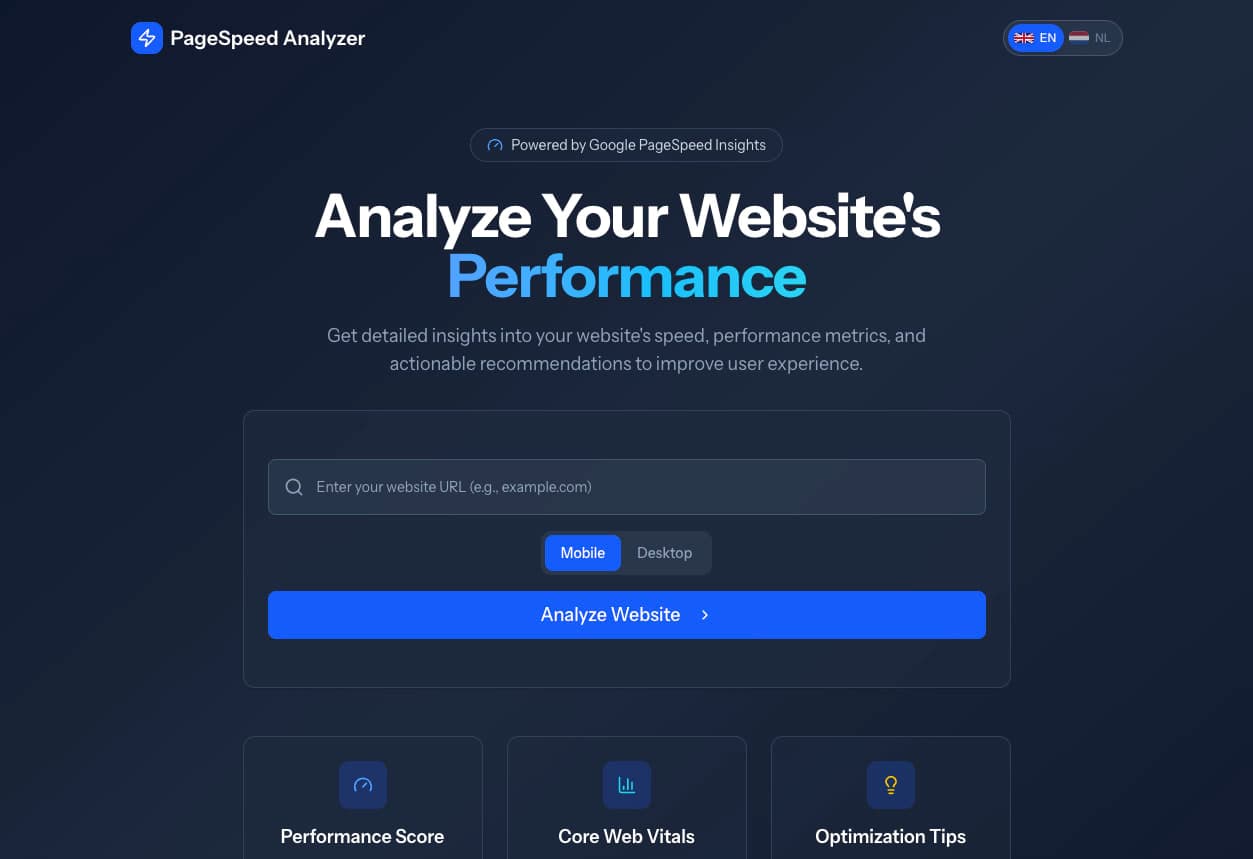
The workflow is dead simple:
- Enter any website URL
- Choose mobile or desktop analysis
- Wait 30 seconds while Google PageSpeed does its thing
- Get a beautiful report with scores, screenshots, and AI recommendations
- Download a branded PDF to send to prospects
- Track when they open it
That last step is the secret weapon. Knowing exactly when a prospect views your report means you can follow up at the perfect moment — while they're still thinking about their slow website.
Tech Stack
The Report Experience
A performance report is only useful if people actually read it. PageSpeed Analyzer reports are designed for non-technical audiences:
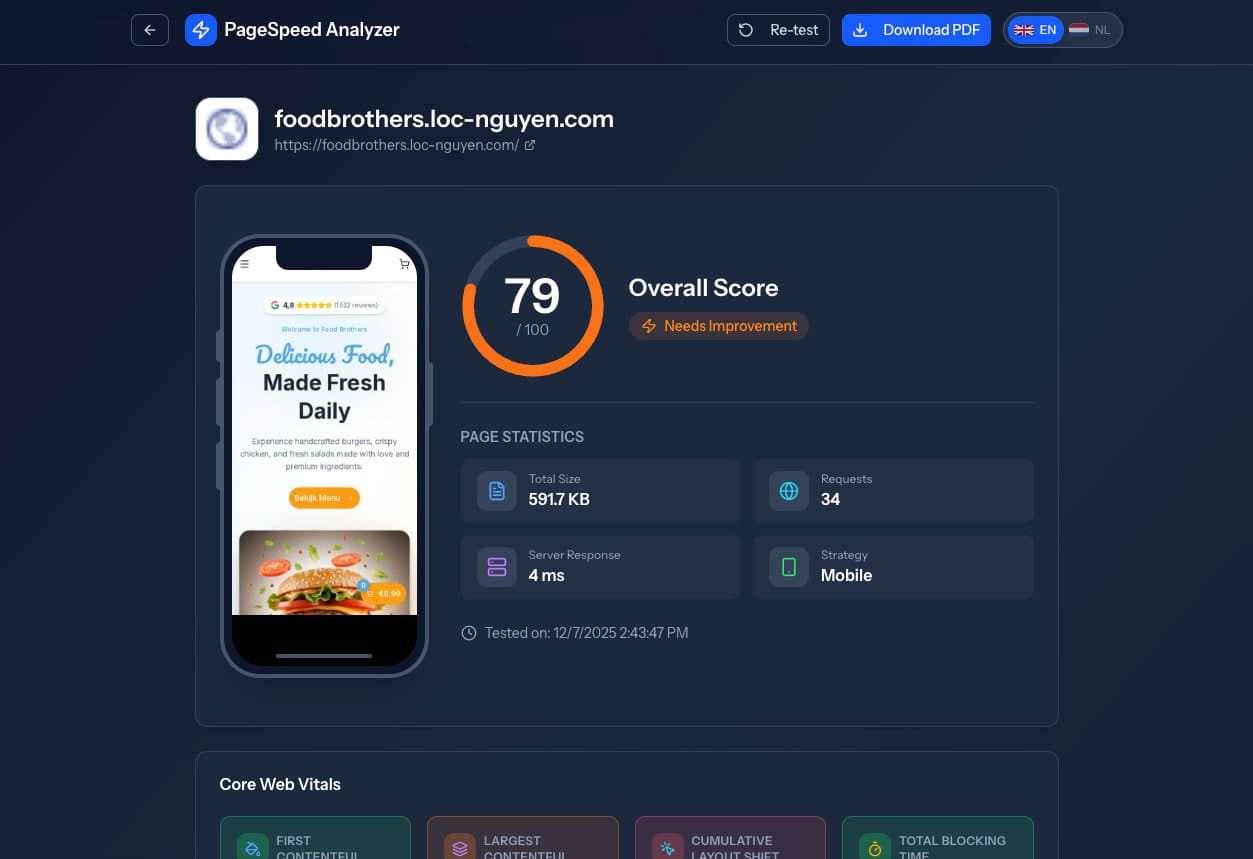
The Score — A big, animated number from 0-100. Everyone understands that 47 is bad and 92 is good. No explanation needed.
The Screenshot — The actual website rendered in a device frame (phone or browser). This proves the analysis is real and personalized.
Core Web Vitals — The metrics that matter for SEO, presented with color-coded severity indicators. Green is good, red needs work.
Optimization Opportunities — Specific issues ranked by impact. Not "improve server response time" but "your images are 3MB larger than they need to be."
AI-Powered Tips — This is where GPT-4 earns its keep. Instead of technical recommendations, prospects get plain-English explanations of what's wrong and why it matters for their business.
The PDF That Sells
The downloadable PDF is where this tool pays for itself. It's a single-page, branded document that looks like something an expensive agency would produce:
- Performance score with visual gauge
- Website screenshot proving personalization
- Top three optimization opportunities
- AI-generated recommendations in business language
- Your contact information and call-to-action

Send this to a prospect cold, and you've already demonstrated more value than competitors who just send generic proposals. The PDF does the selling for you.
Analytics That Close Deals
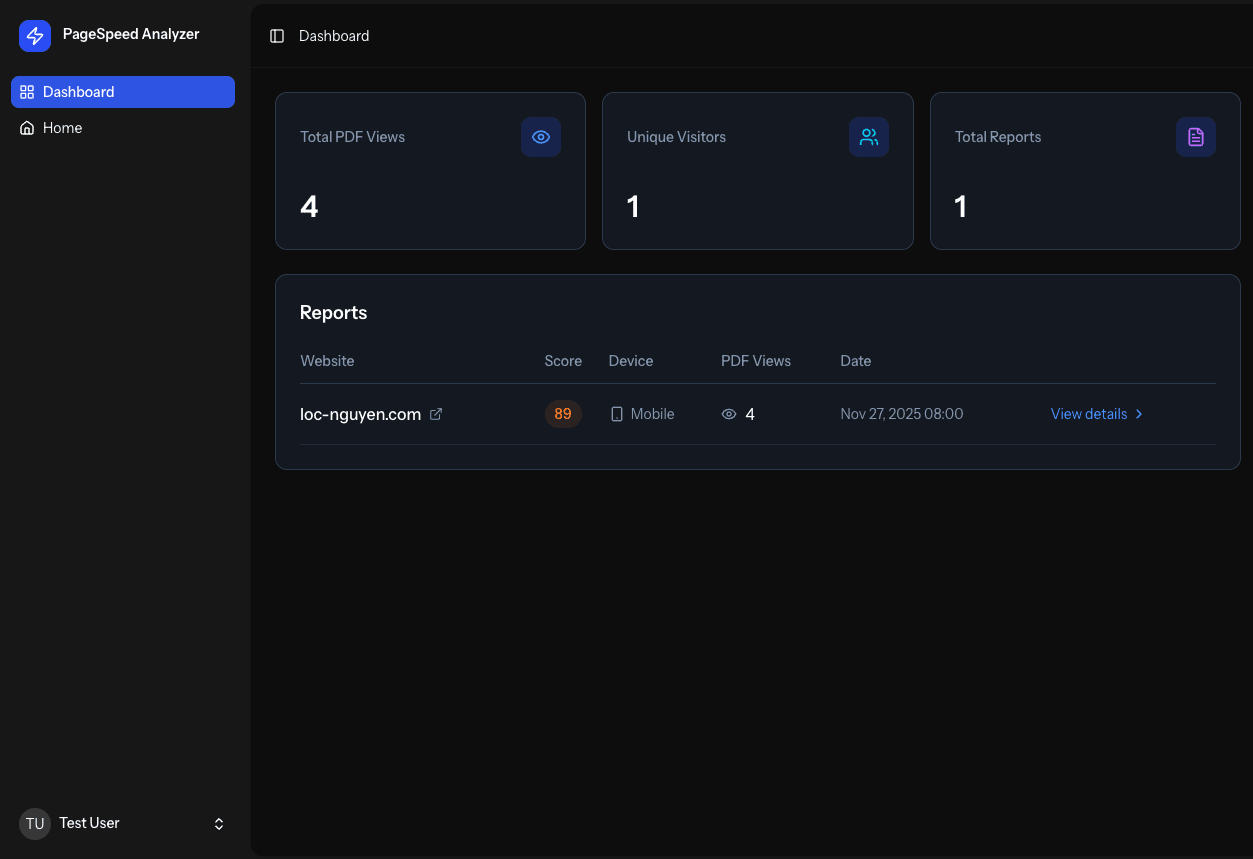
Every PDF download gets a unique tracking link. When a prospect opens the report, you know:
- Exactly when they viewed it
- How many times they came back
- What device they used
- Where they came from (referrer)
The admin dashboard aggregates this data across all reports. Sort by recent views to find hot leads. See which reports get opened multiple times — those prospects are seriously considering their options.
Built for the Dutch Market (and Beyond)
Full bilingual support means every piece of text — UI labels, error messages, AI recommendations — works in both English and Dutch. One toggle switch, instant language change, no page reload.
For agencies serving international clients, this is table stakes. For agencies competing in the Netherlands, it's often the difference between winning and losing local business.
Enterprise-Grade Security
This isn't a toy. The authentication system includes:
- Two-factor authentication (TOTP)
- API key access for programmatic use
- Rate limiting on all endpoints
- Secure session management via Laravel Fortify
Agencies handling client data need to trust their tools. PageSpeed Analyzer is built to that standard.
The Technical Foundation
The backend is Laravel 12 with Inertia.js bridging to a React 19 frontend. This architecture delivers the best of both worlds: Laravel's robust backend ecosystem (authentication, queues, API handling) with React's component-driven UI.
PDF generation uses Spatie's Laravel PDF package, which renders React components server-side. The AI integration hits OpenAI's GPT-4 API with carefully crafted prompts that produce business-friendly recommendations every time.
The Google PageSpeed Insights API does the heavy lifting on performance analysis. No need to run our own Lighthouse instances — Google's infrastructure handles the load.
Who This Is For
Digital Agencies — Generate professional audits for prospects at scale. The PDF tracking tells you exactly who's interested and when to follow up.
Freelance Developers — Demonstrate expertise before the first call. A personalized performance report builds more trust than any portfolio.
SEO Consultants — Core Web Vitals directly impact search rankings. This tool quantifies the problem and positions you as the solution.
Web Performance Specialists — Streamline client acquisition. Analyze prospect sites, generate reports, track engagement — all from one dashboard.
The Business Math
Let's be honest about ROI. If you're an agency charging €2,000+ for performance optimization projects, you need to close one extra client per year to justify building (or buying) a tool like this.
But here's what actually happens: agencies using lead generation tools like this close more deals because they're reaching prospects with proof of value instead of generic pitches. The PDF report isn't just marketing — it's a demonstration of exactly what you can deliver.
What I Learned
Building PageSpeed Analyzer reinforced something important: the best B2B tools solve sales problems, not just technical ones. The Google PageSpeed API was the easy part. The hard part was designing a workflow that actually helps agencies win clients.
The PDF tracking feature came from a simple insight: knowing when prospects engage is worth more than the report itself. That single feature transforms the tool from "nice to have" into "competitive advantage."
Laravel + React via Inertia.js proved to be the perfect stack for this kind of application. Server-side rendering for SEO, React's component model for complex UI, Laravel's ecosystem for everything else. No compromises.